As we’ve progressed in our studio photography journey (and added more gear - thank you, FJ Westcott!), I’ve realized we’ve fallen into a bit of a trap. You know the one: “Well, we have X amount of strobes, so let’s use them!”
A few weeks of non-stop dance headshot work definitely didn’t help break that mindset either. But here’s the thing: just because we can use all the lights doesn’t mean we should.
I started noticing that it was actually holding us back creatively. My (George’s) brain tends to start with a creative concept, but then the tech side takes over saying “Light A will do this, Light B will do that, Light C will do that…” until every strobe has a job. And once that train gets rolling, it’s hard to stop.
Look 1: Keeping It Simple
Recently, our friend Dana, who’s a business owner and occasional model, reached out wanting some new content for her social media. She asked for three outfits and three lighting looks.
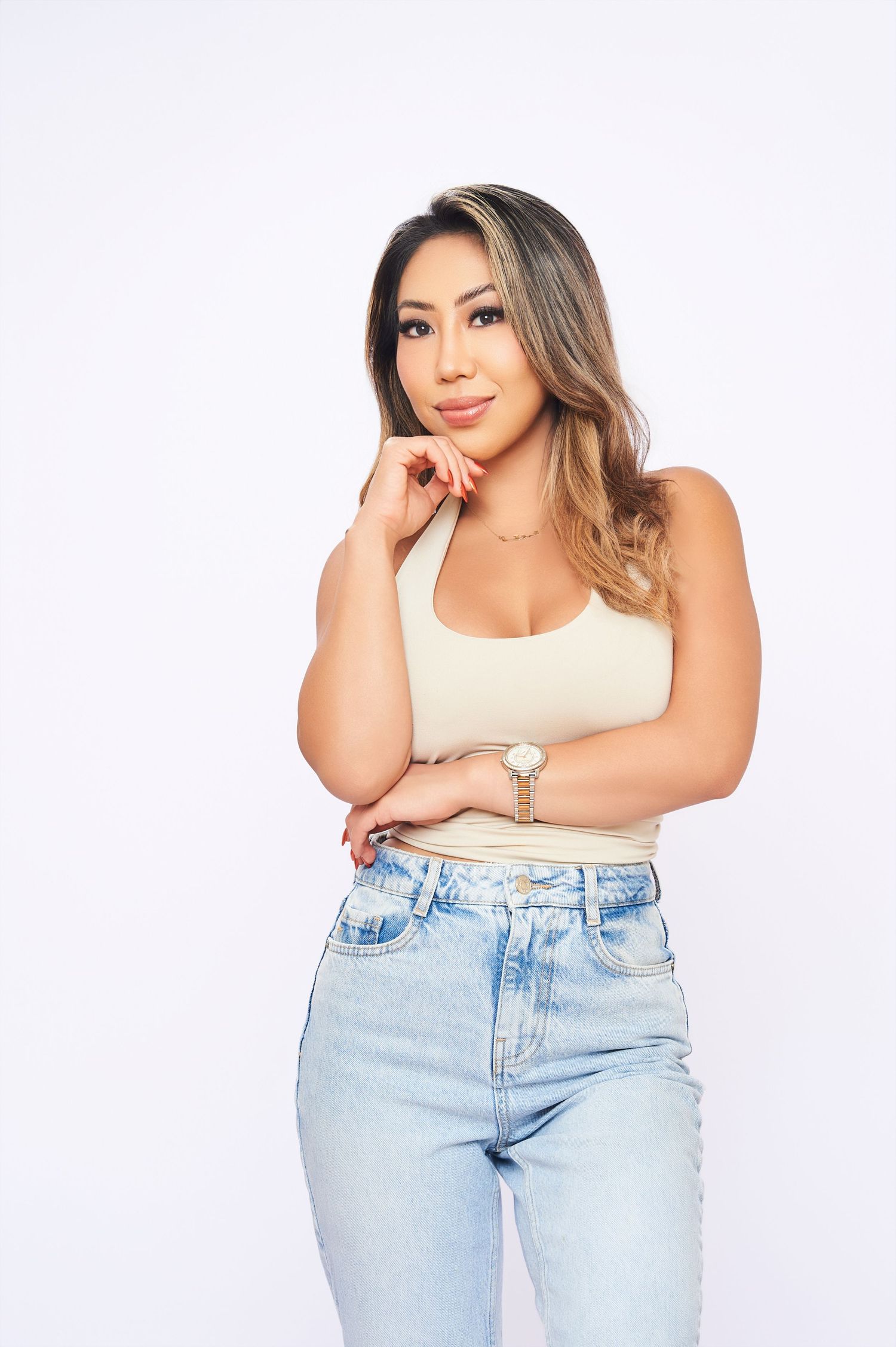
My first thought was, “Okay, we’re shooting on white. I’ll use two FJ200s to light the backdrop.” But then I had to hit the brakes. Sam was traveling, so it was just me for this one, serving as photographer, digital tech, lighting assistant… the whole thing! Managing five lights across three setups sounded like a lot.
So I decided to simplify.
I ended up using just two lights:
- FJ800 with a 7ft umbrella as the key light
- FJ400 with a Westcott Apollo Strip on a boom for the hair light
And honestly? I loved how they turned out. Better yet, so did Dana. The images were clean, simple, and exactly what she needed for her brand. Plus, it made switching between setups so much easier.
Look 2: Controlling the Spill
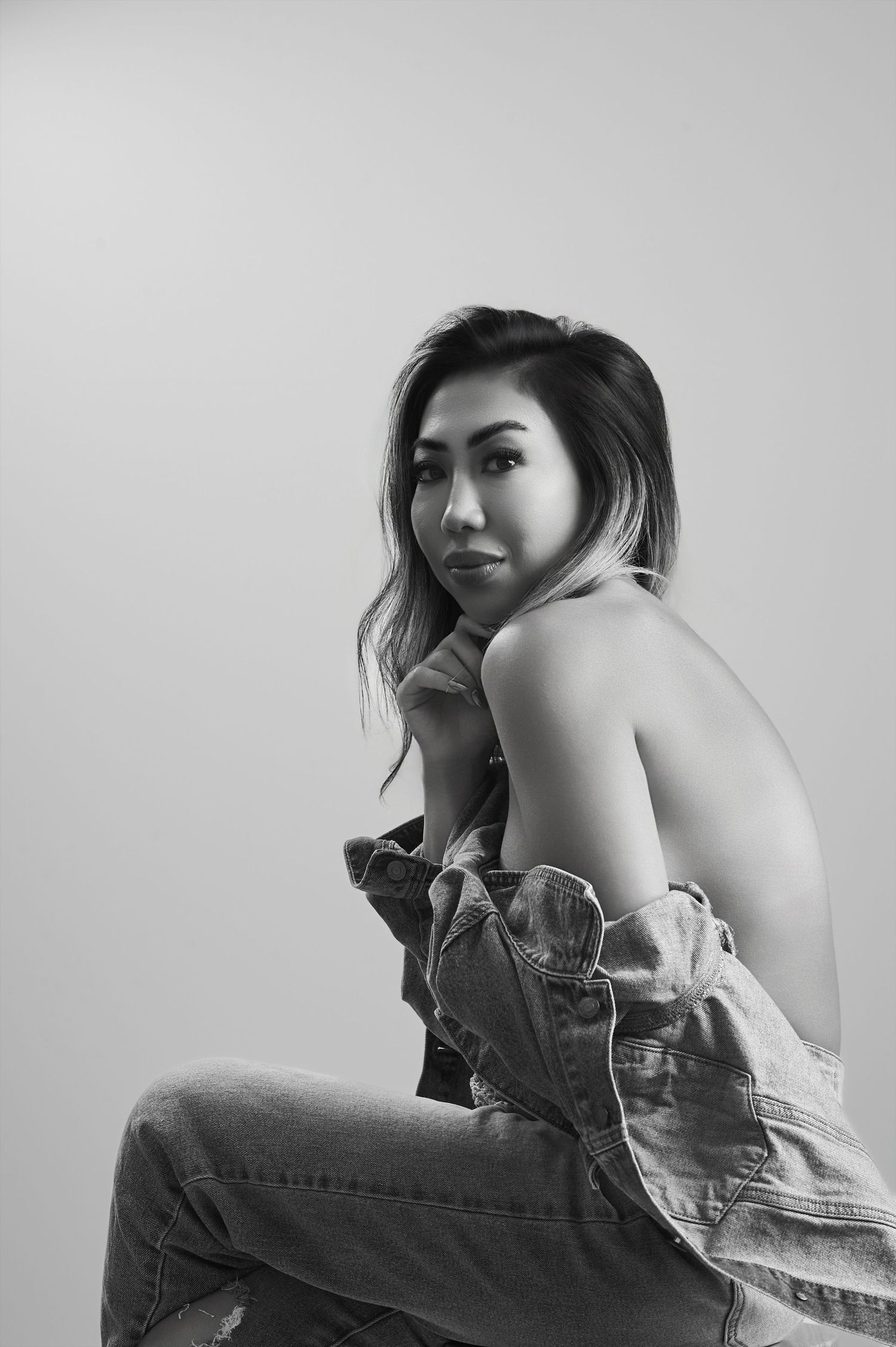
For the second look, I kept the same two lights but switched up the placement. Instead of having the 7ft umbrella directly in front of Dana, I went for split lighting and added a black V-flat in front of the FJ800 to control spill, which is super important in our cozy 15’x20’ studio.
The FJ400 with the Apollo Strip stayed in, but I moved it behind her at an angle. That way, it just kissed her face from behind, filling in a bit of shadow and adding a nice highlight to her right shoulder. Oh, and this time I threw a grid on the strip box to really control the light.
Again, super simple setup. But it gave us a totally different vibe from the first look. It reminded me that with just two lights and a few modifiers, you can get such a wide range of results.
Look 3: Spotlight Drama
The last look was the most fun, and definitely the most different. I
stuck with two lights again, but swapped out the modifiers.
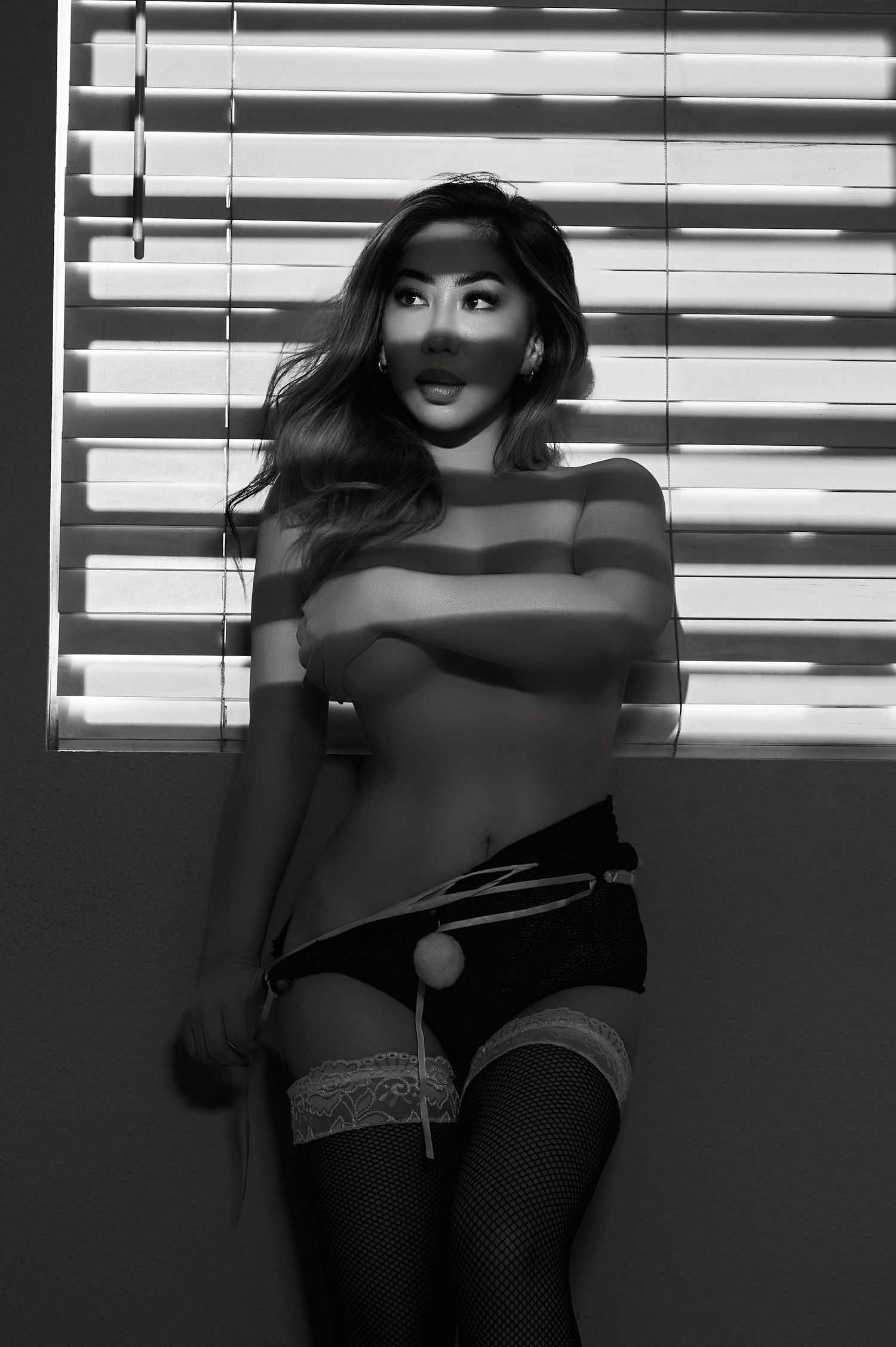
Instead of the big umbrella, I brought out one of our favorite tools: the FJ Westcott Lindsay Adler Optical Spot. If you’ve never used one, it’s an awesome tool for shaping light. You can get that dramatic, trendy “spotlight” effect, or even carve out shapes using gobos and blades.
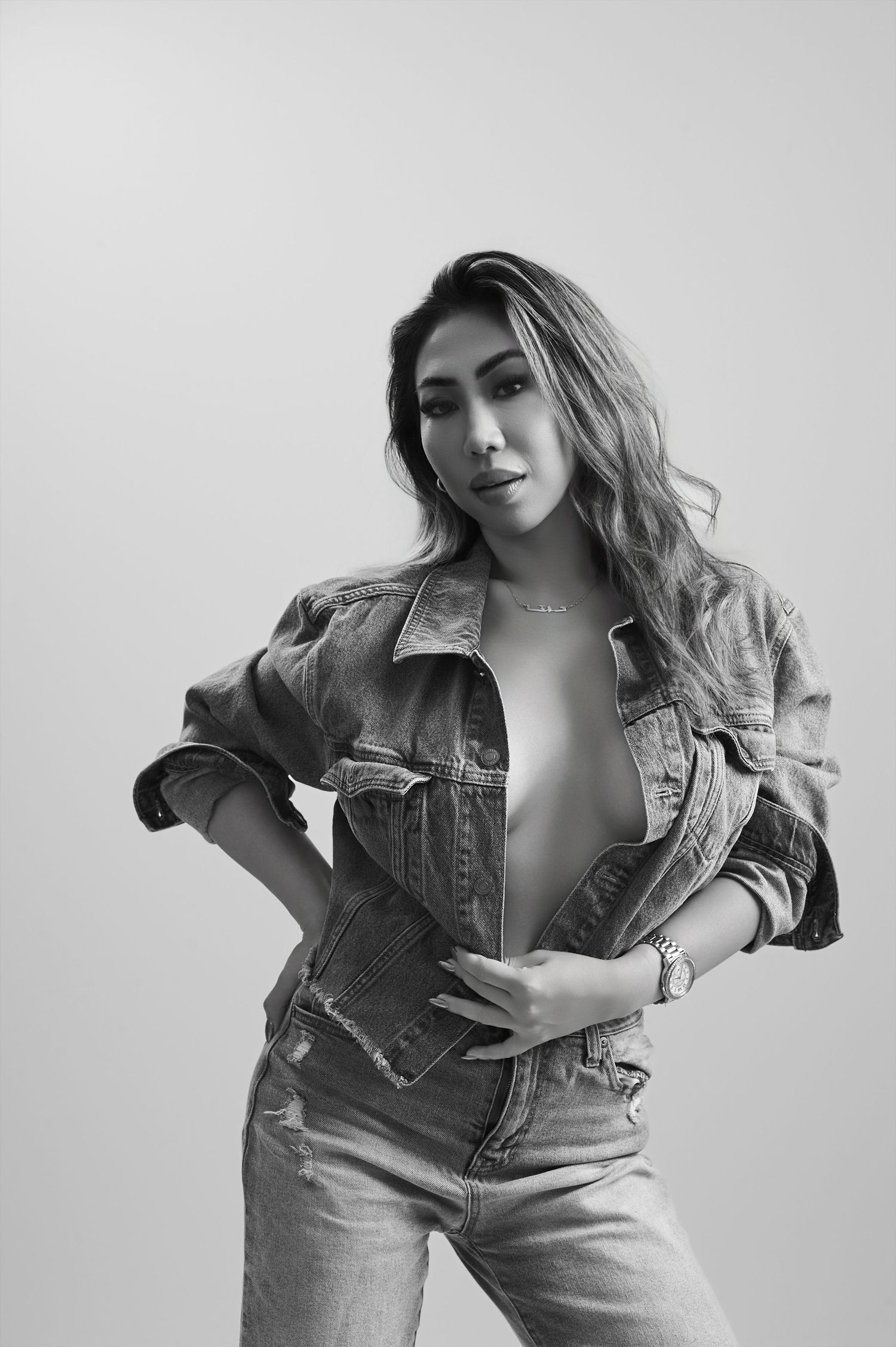
For this setup, I used a curtain-shaped gobo with the FJ800 and Optical Spot as the key light. It let me control exactly where the light hit, so only the parts of Dana that I wanted lit were illuminated. To keep things from getting too dark or moody, I added the FJ400 as a fill light.
With Dana positioned near a window, the combo of the Optical Spot and fill gave us these really cinematic, punchy shots. We were both obsessed with how they came out!
Final Thoughts
This shoot was such a good reminder that more gear doesn’t automatically mean better photos. Sometimes the best thing you can do for your creativity (and your sanity) is to keep it simple.
With just two lights, a few modifiers, and some intention behind placement, you can build a ton of different looks. And honestly? It feels good not to overcomplicate things.
Because at the end of the day, less really is more.